Exotic Caribbean Worth a Closer Look
I spoke this week with a Caribbean Tourism Organization official who complained that the region is often overlooked.
More specifically, he noted that one week after CTO’s State of the Industry conference presented innovative and newsworthy perspective from a variety of influential speakers, a “great” conference had ended and “our audience has moved on to the next project as if it never happened.”
Yet he might have been speaking generally about the Caribbean’s profile among international travel destinations. Now, it would be less than accurate to say the Caribbean is lost among the handful of international destinations that each year attract travelers from around the world.
After all, as Richard Sealy, CTO’s chairman, pointed out at the conference, 14.8 million visited the region in the first half of the year. And the region has never been much of a secret, as travelers dating back to the 16th century have marveled at the Caribbean’s resplendent beaches, lush rainforests, inspiring landscapes and golden sunsets.
But what’s perhaps less well known is that the 2014 arrivals figure represents a 5.8 percent increase over the same period in 2013, a figure Sealy said is well above the 4.1 percent increase averaged by other global destinations. Despite fierce competition from a myriad of intriguing global travel destinations, travel to the Caribbean is growing.
And yet, Caribbean destinations are not often mentioned among travel’s emerging, exotic hot spots like Africa and Asia. Nor can the region’s cities claim the international must-visit status bestowed on destinations like Paris, London, Barcelona or Rome.
As I’ve traveled across the region in the past few years, I’ve increasingly found the situation difficult to understand, although at the same time familiar. It’s easy for travelers to see the Caribbean’s most characteristic regional attributes – brilliant blue waters, endless stretches of white sandy beach and lush flora and fauna – and believe every island is exactly the same. Each is magnificent, but achingly similar.
Yet nothing could be further from the truth. The Caribbean’s real treasure, beyond the natural wonders – is the amazing array of culture and living history that populates these long fought-over nations. Perhaps travelers are beginning to realize there are a lifetime of exotic and singular experiences awaiting those who are willing to explore the region’s most familiar and lesser-known quarters.
I’ve been fortunate in the past year to experience a lifetime’s worth of distinctive and inspiring travel experiences in destinations across the Caribbean.
This summer I surveyed the Caribbean’s best art scene in Haiti, a jewel of a destination that is once again welcoming leisure travelers after a long struggle with crippling poverty and unstable governments.
At the El Saieh Gallery in Port au Prince I was fascinated by original art featuring characteristic Haitian themes ranging from tableaus of the country’s origin as the first nation born of a successful slave revolt to depictions of spirituality, celebration, dance and fanciful visions of dreams, love, and romance.
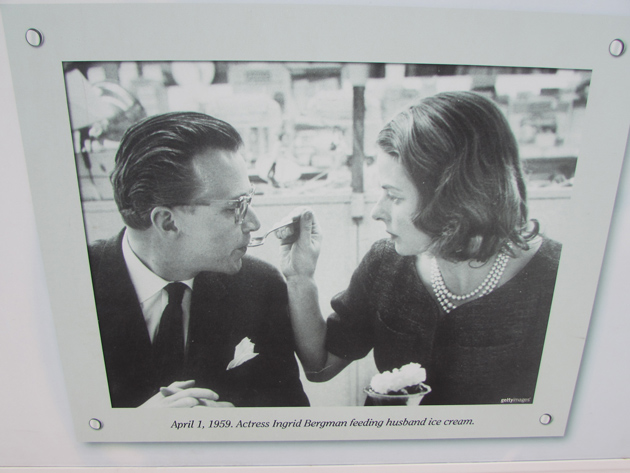
PHOTO: Art work from Haiti’s El Saieh Gallery. (All photos by Brian Major)
I also visited the village of Jacmel on Haiti’s southern coast, a historic town where richly detailed murals and intricate tile designs adorn buildings, walls and public staircases through the town.
Jacmel’s ground-floor warehouses built by 18th and 19th century coffee barons now house shops featuring the original artwork and handicrafts of the city’s many artisans, from papier-mâché masks to carved-wood animal figures.
The village of Noailles on Haiti’s northern coast is home to dozens of skilled artisans convert recycled metal into works of art. Travelers can stroll along a pedestrian plaza created by the government to house many of the craft-makers’ shops.
In Santo Domingo, the historic capital of the Dominican Republic, I strolled Calle de Las Damas, the oldest paved street in the Americas, in the city’s Zona Colonial.
At Plaza de Espana, a broad stone courtyard bordered on one side by the Ozama River, I found the Alcazar Colon, the restored, one-time palace of Don Diego Colón, a son of Christopher Columbus. Colón was the Spanish viceroy of the captaincy general of Santo Domingo during the palace’s 1512 construction.
PHOTO: Alcazar Colon in Santo Domingo’s Zona Colonial.
The magnificent coralline stone building features an array of period furnishings, paintings, sculpture and decorative accessories, artifacts were not necessarily owned by Colón himself but nevertheless are authentic 16th century pieces.
Contemporary sources have described the collection, which includes Flemish tapestries created by the Van Den Hecke family, as among the Caribbean’s most important collections of European late medieval and Renaissance art.
Not all of the Caribbean’s wonders are tied to history and fine art. In St. Maarten, I visited the Carousel Gelateria Bar, which in addition to a magnificent selection of flavorful ice creams and gelatos, offers a magnificent display of paintings, advertisements, images and photographs of people eating and enjoying ice cream.
My favorite of the Carousel photographs is a black-and-white photo from 1959 that depicts a beautifully attired Ingrid Bergman carefully feeding a spoon of ice cream to her equally well-dressed husband, producer Lars Schmidt.
PHOTO: Ingrid Bergman and husband at the Carousel Gelateria Bar in St. Maarten.
This year has offered me all those and many more Caribbean experiences, almost too many to recall. The region is one to which multiple visits are not only warranted, but recommended to anyone who dreams of travel to exotic lands.
Leave a Reply