Church Shares Caribbean Culture to Build Local Connections
A gathering at Wayman AME Church on west Olive in Bloomington this weekend was more than a service, it was a latin American celebration of traditions associated with the feast of the Epiphany.
“We are a church in the heart of the community with a heart FOR the community and we want there to be unity in the community and we want this to be an open space for that and we’re going to continue to keep our doors open to the community,” said Rev. Dr. Brigitte A. Black in explaining why her church put on the program, “Caribbean Cultural Connections: From Christmas to the Three Wise Men.”
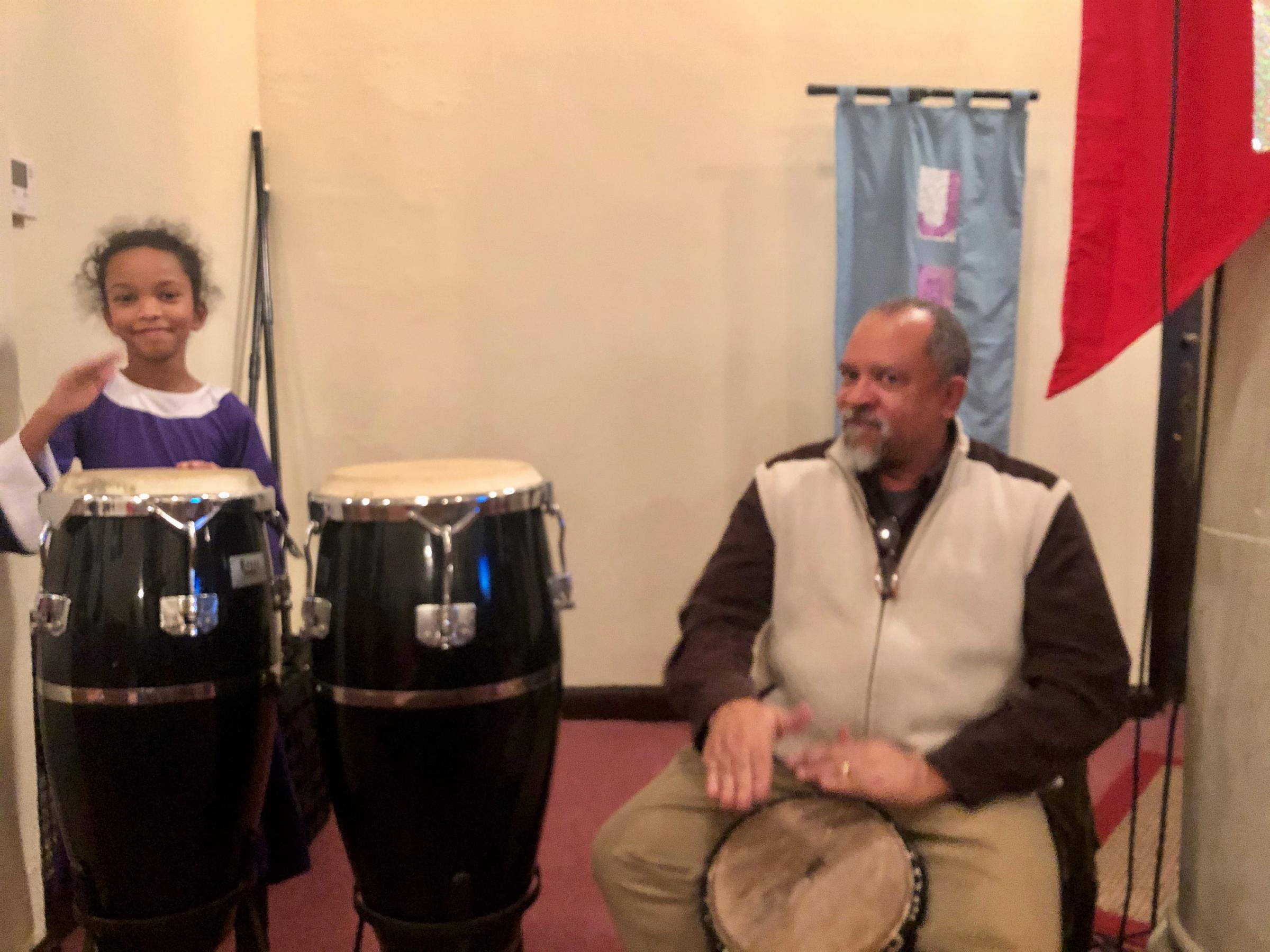
The service began with church member Ky Ajayi and his daughter Lara’s Caribbean-flavored drum Call which references the culture of three islands whose traditions will be highlighted: Cuba, the Dominican Republic and Puerto Rico. Then, attendees sing the traditional spiritual hymn “Go Tell it On the Mountain.”
For the next hymn, some untraditional elements are dded. Agape dance troupe Director Lyndetta Alsberry instructs those in the pew on specific movements to go with the lyrics.
The evening’s featured speaker is Jessie Dixon-Montgomery, an associate professor of Hispanic Studies at Illinois Wesleyan University. Through her PowerPoint presentation, Dixon-Montgomery explains for 30 years, Cubans could not celebrate Christmas or the feast of Epiphany usually on January 6th. It marks the visit by three kings to bring gifts to the Christ child.
“Los Reyes Magos, the three wise men, who traditionally visited Cuba did not come bearing gifts because of the government of Fidel Castro’s revolution of 1959 which abolished all religious holidays since they were against Communist principles,” she instructed.
Dixon-Montgomery said the ban on religious celebrations changed after Pope John Paul the Second visited Cuba but that children now mostly receive toys from charities because so many live in poverty.
In the Dominican Republic, Christmas has become a bigger celebration as ex pats who fled the revolution and settled in New York and New Jersey, returned to the island with a more American emphasis on gifts and a big Christmas Eve dinner.
“Family members gather together and have great Dominican food, including the roast suckling pig and pastelles which are like tamales, Mexican tamales, but they are not made out of a corn base. It’s usually plantains or it could be yam or it could be yucca,” she explained.
Dominican children do not receive gifts until the Day of the Kings, January 5th. Children put water and grass under the Christmas Tree for the camels as the Three Kings pass in the night and every child goes to bed.
In Puerto Rico, the Christmas season begins in late November with parrandas, parades and carolers singing mostly secular songs as they travel their neighborhood. Dixon-Montgomery says the season ends with a big parade and the three wise men traveling the island, handing out gifts to children.
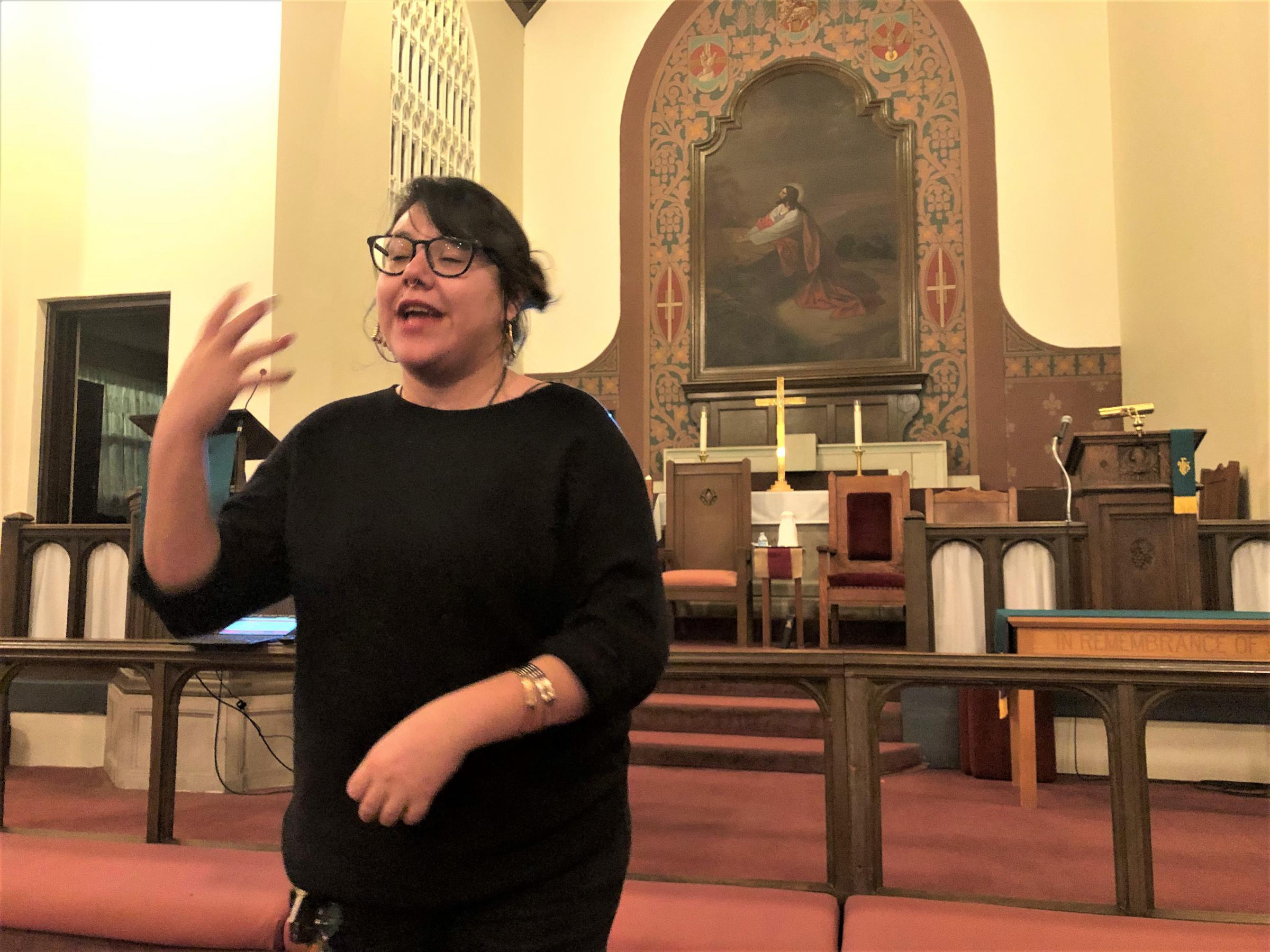
Among those attending the Caribbean Cultural Connections service was city of Bloomington Ward 6 council member Jenn Carrillo Gomez who was born and raised in Mexico City. She migrated to the U.S. with her family as a child.
Carrillo Gomez says maintaining traditions help immigrants maintain their identity and connection to their roots.
“The wisdom, the magic and the rituals of our ancestors are an essential part of who we are, an essential part of our identifies, and they are the things that help us make friends into family members, houses into homes and cities and towns into real communities,” she shared.
Carrillo Gomez thanked church leaders for providing a space to share traditions which she says too often immigrants are forced to abandon when they come to the United States.
“Not only do we have to leave our ancestral lands and our families, but we also have to give up parts of ourselves to be able to have a life here. And, so it is important that we move with intention and that create spaces such as this one to begin to share with one another so that we can make ourselves and each other whole in community. I want to encourage us to keep doing this,” she suggested.
Dixon-Montgomery agreed that events such as the Cultural Connections event help build important connections.
She suggested, “I think we’re at a point now where we feel people are so different. They’re nothing like us. We don’t want anything to do with them. They look different. They talk differently and so I think we need to find some connection between.”
Dixon-Montgomery has only been in Bloomington-Normal for four months, arriving from Galesburg where she taught at Knox College. She said while it has been a mostly welcoming community, some people are surprised to learn she has experienced subtle racism.
“If they’ve never experienced it, they think ‘Things have gotten better. They’re not like they used to be in the 60s’ and someone told me that. And, then when I started recounting personal incidents they said, ‘Ok, we see the division, we see that people are not quite as happy as we thought they should be,’” she shared.
Dixon-Montgomery added, “It’s not that I’ve experienced big things, I’ve experienced some subtle things that make you say, ‘People still aren’t coming together. People are still afraid and don’t know one another and they’re still afraid to reach out.’”
The longtime teacher said she embraces any opportunity to raise cultural awareness, even when it comes to Spanish language.
“There is also a tendency in our community to label any Spanish speaker either Spanish or Mexican and I want people to know there are a lot of Spanish speakers in 22 countries, including the United States. There are a lot all over the world and they bring valuable traditions and valuable values to the pool,” she suggested.
She said sharing cultural traditions and spreading knowledge locally can help break down some walls rather than, as she put it, “building walls we don’t know exist.”
People like you value experienced, knowledgeable and award-winning journalism that covers meaningful stories in Bloomington-Normal. To support more stories and interviews like this one, please consider making a contribution.
Leave a Reply