London’s new cruise terminal gets the green light
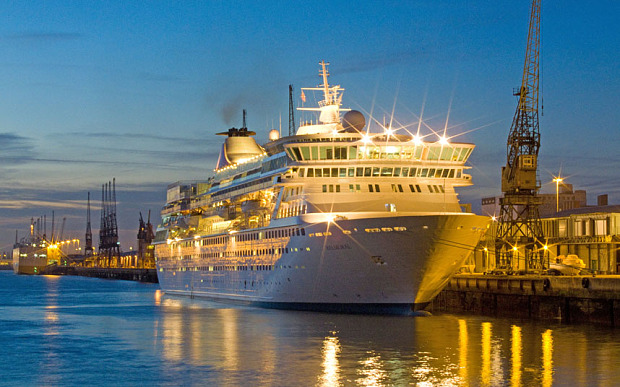 Fred Olsen’s Balmoral docked in Southampton
According to a statement from the Royal Borough of Greenwich, the Mayor’s office confirmed it “is satisfied with measures put in place by the Royal Borough to ensure robust monitoring of air quality, with nearly half a million pounds being committed towards air quality monitoring and improvement”.
Wharf.co.uk reports that the Mayor’s office carried out an independent air quality consultancy through Amec, to study the impact of emissions, which it recognised would create “some moderate adverse impact on occasion.” It reported: “There has also been £400,000 committed towards ‘ongoing environmental monitoring or improving air quality’ to Greenwich Council’s Air Quality Action Plan – yet it is not clear what this will entail.”
Cllr Thorpe said the purpose-built cruise terminal would be a major boost for tourism. “This is an important step forward, not just for Greenwich, but for the capital,” he said. Greenwich’s heritage and its riverfront already ensure that the Royal Borough receives millions of visits by tourists each year, contributing some £1.1 billion to the local economy and supporting 16,000 jobs.
“This landmark development will bring thousands more visitors to the borough.”
Some cruise ships already sail from London’s Tower Bridge terminal, via Greenwich, to destinations including the British Isles, Ireland, Baltic and Scandinavia. Due to the constraints of the Thames however, only small ships can squeeze up this far to moor at London Tower Bridge, adjacent to HMS Belfast, with passengers boarding by tender from the north side of the river close to the Tower of London.
No-fly cruises from the UK: the Ultimate Guide
The terminal at Greenwich will accommodate 55 cruise ships annually.
Industry body CLIA (Cruise Lines International Association) said it cannot comment about the new cruise terminal specifically but stressed that the industry “is a leader in the global maritime community in environmental stewardship and environmental best practice.”
This includes the installation of exhaust gas after-treatment systems to reduce pollutant air emissions and the development of particle filters, scrubbers, alternative maritime fuels, and the use of liquefied natural gas both while in port and at sea. “We also support additional regulations to limit nitrogen oxide emissions, which will become binding in January 2016,” said a spokesman.
Costa Cruises recently announced it is building “the most environmentally friendly cruise ships ever built.” Both of its new ships will rely solely on the natural gas (a relatively clean-burning fuel), instead of the combination of gas turbines and diesel that most cruise ships use, thus cutting down dramatically on carbon emissions.
Leave a Reply