How Hurricane Matthew May Affect Your Travel
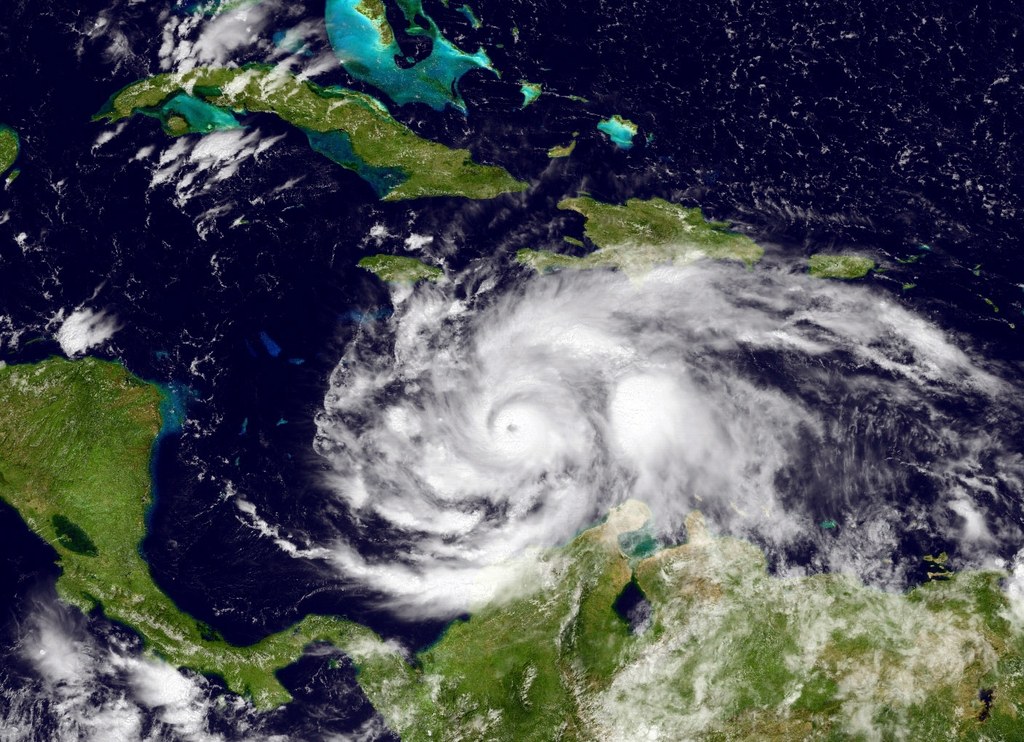
Hurricane Matthew in the Caribbean Sea just south of Cuba and Jamaica on October 2.
The strongest Atlantic storm since 2007 is bearing down on the Caribbean, and is expected to dump three feet of rain and sustain winds up to 140 miles per hour. After turning north northwest on Saturday night, experts predict Category 4 storm Hurricane Matthew will make landfall in the Caribbean in the next 24 hours with Cuba, Jamaica, and Haiti in its immediate path. Haiti is particularly vulnerable, as many are still living in makeshift homes following the devastation of a 7.0 magnitude earthquake that hit the island in 2010, which left hundreds of thousands dead and hundreds of thousands more homeless.
While not in the storm’s immediate path, but likely to experience some of the storm’s effects, a hurricane watch has been issued for Turks and Caicos, the Cuban municipality of Camagüey, and the central Bahamas. Here’s how your travel might be affected.
Air travel
Most of the major airlines including Delta, American, JetBlue, as well as Air Jamaica and Caribbean Airlines are offering fee waivers for travelers booked to many of the central and western Caribbean islands this week, including Jamaica, the Bahamas, Haiti, Turks and Caicos, or Cuba. Customers can rebook or cancel and get a refund without incurring change or cancellation fees, which can run upwards of $200. If you are scheduled to fly in the coming week, contact your airline for immediate assistance.
Cruising
Royal Caribbean, Norwegian, Disney and Princess Cruises have all changed their itineraries to avoid the storm’s path. Some cruises bound for the Bahamas may stop at Key West instead; some ships scheduled to stop in Half Moon Bay and Grand Turk will head to Mexico; some may change course altogether and head north to New York and Canada; and others will simply reverse their itineraries and hope to head to the Caribbean after the storm passes through. Due to sail in the coming week? Contact your specific cruise line for more information.
What to Do When a Crisis Strikes During Travel
Already there…
If you’re already at your destination and want to get out while you can, try to see if you can change your flight to leave as you can, as it’s possible that once the storm hits, you’ll have to wait until after the storm passes and damage is assessed before you can leave. Locate the nearest embassy, the nearest hospital, and stock up on emergency supplies like a battery-powered radio, water, and non-perishable food.
Driving
Coastal flooding and erosion are likely to happen regardless of whether the storm makes landfall in the U.S., as Matthew is forecasted to maintain or even gain strength as it makes its way north. Take extra caution when driving in areas that may be flooded and opt for higher roads: six inches of water will reach the bottom of most passenger cars, causing loss of control and potential stalling; and a foot of water can float a car.
Looking ahead
Further trajectories for the storm are largely unknown at this time, with European models showing Matthew blowing out to sea in the coming days and the American model forecasting the hurricane may parallel the East Coast of the U.S. with the possibility of making landfall. If Matthew does make landfall in the U.S., models show it hitting the Florida coast by Friday morning and the Carolinas by Saturday. Meteorologists have not yet ruled out that the hurricane could even make its way as far north as New England by next weekend.
Leave a Reply